


Ayurvedic Treatments for Skin Diseases: Natural Remedies for Healthy Skin
Dermatological diseases are increasingly common. Autoimmune conditions, stress, and exposure to environmental pollutants all contribute towards this phenomenon, implying that the health of our skin is correlated to our general health and well-being. Similarly, the health and appearance of our skin can impact our mental and emotional well-being, and self-confidence.
Long-term or recurrent skin conditions not only cause embarrassment, but could also lead to infections through skin lesions. They can be quite difficult to treat, and extensive use of topical steroids, antibiotics, and strong medications could cause harm in the long run. This is why ayurvedic treatment for skin diseases is become increasingly popular, as it provides effective natural remedies for skin disorders.
Understanding Skin Disorders in Ayurveda
In ayurveda, the term ‘kushta roga’ refers to a cluster of skin diseases that are believed to stem from an imbalance in the body’s three ayurvedic doshas- vata, pitta, and kapha. These doshas are said to determine the physiological, emotional, and spiritual well-being of an individual. They therefore need to be at equilibrium for every aspect of the body, skin included, to be in good health. Veering away of one or more of these ayurvedic doshas from their state of equilibrium can have effects that manifest in the form of various disorders, including skin diseases.
Healthy skin is a reflection of a healthy body and physiological functioning. Hence, in ayurvedic terms, skin diseases are not merely superficial conditions that need to be treated topically, but are the external manifestation of underlying conditions that cause an imbalance in doshas. Ayurveda treatment for skin diseases targets these underlying conditions in a holistic approach, with the intention of long-term results and complete healing.
Types of Skin Diseases in Ayurveda
Depending on their severity, depth of tissue damage, and dosha involvement, kushta roga are classified into:
- Maha kushta (major skin diseases), which often involve all three doshas, and cause damage to the tissues below the skin as well. They can be quite challenging to treat, and may recur even after having seemingly healed. They thus require close attention and meticulous treatment to achieve a significant outcome.
- Kshudra kushta (minor skin diseases), which often involve one or two doshas. The damage is mostly superficial. However, if left untreated, they can become harder to treat, and can progress to more serious conditions over time.
A few common examples of kushta roga that can be effectively treated using ayurveda include:
- Kitibha (psoriasis), an autoimmune condition that is characterised by hardened, scaly skin patches that appear red/pink/purple/brown in colour. The condition may be localised or may cover the entire body. It usually involves vata and kapha doshas.
- Shwitra (vitiligo / leukoderma), an autoimmune/genetic condition characterised by loss of pigmentation in small or large patches of skin. It usually involves vata and pitta doshas.
- Vicharchika (eczema / dermatitis), a skin inflammatory condition characterised by itching, redness, small blisters and/or thickening of skin. It usually involves kapha dosha.
- Kilasa (keloids), a condition where excessive scar tissue forms following trauma or inflammation. It usually involves vata, pitta, as well as kapha doshas.
- Skin rashes (e.g. hives), that may be characterised by itching, redness, bumps, swelling, blisters, cracking, etc. These may be localised or widespread across the body. All three doshas may be involved in these conditions.
Ayurvedic Treatments for Dermatological Diseases
There are different types of ayurvedic treatment for skin diseases offered at Adhitya Ayurveda. Following examination, our experienced ayurvedic doctor will decide on what the best treatment path is, depending on the type and intensity of a given skin condition, and taking into account what dosha/s need to be balanced. One or more of the following treatments may be administered:
- Virechana (purgation), the administration of purgative substances for the cleansing of pitta dosha. It is used to cleanse the body of toxins in the blood, glands, and digestive organs.
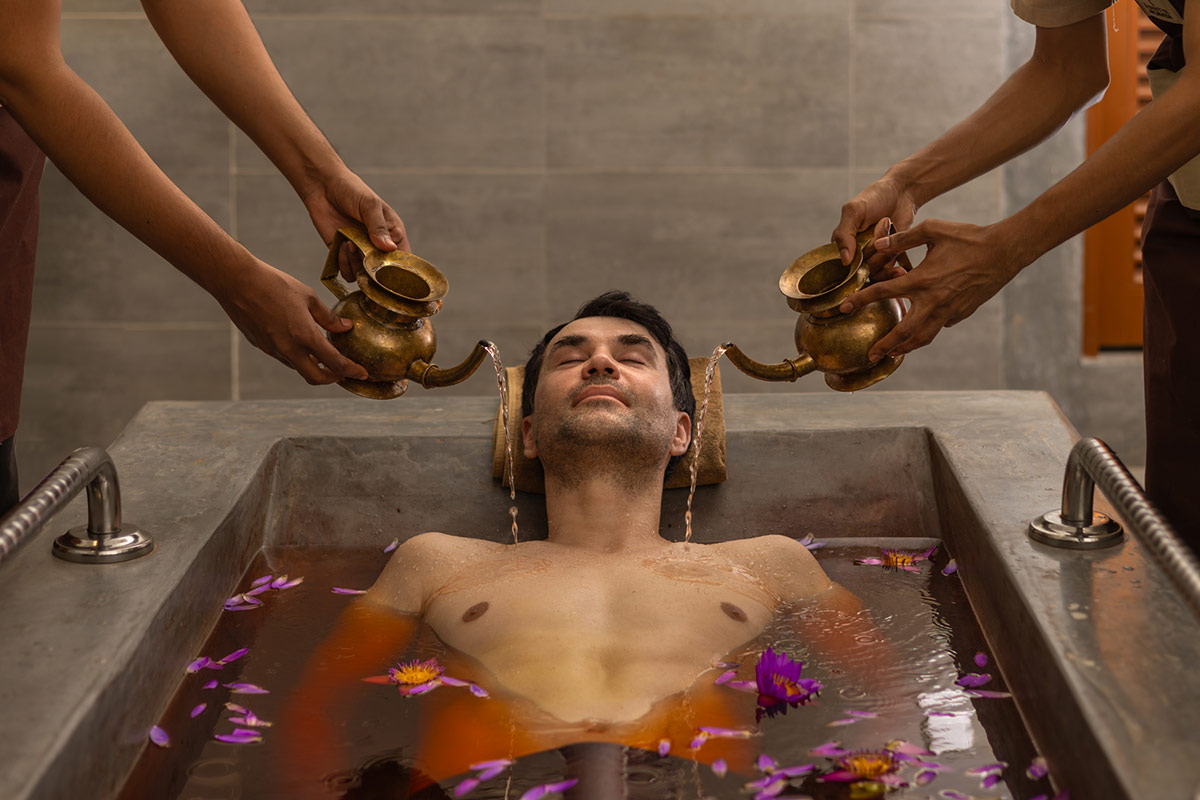
- Avagaha (herbal bath), immersion of the body in a bath of warm herbal decoctions or oil, inducing sweating and circulation to promote relaxation and detoxification.
- Pattu (herbal paste application), the application of a medicated herbal paste, usually to soothe and detoxify a localised condition.
- Parisheka (decoction pouring), the pouring of hot medicated herbal decoction over the body or affected areas, to induce sweating, and thereby help in detoxification.
- Rakta mokshana (bloodletting), the process of making a sterile incision in a vein to rid the body of vitiated blood, mostly caused by pitta dosha imbalances.
- Abyanga (massage), anointing and massaging the body with warm, herbal oils to promote relaxation, circulation, and detoxification.
- Pichu (soaked linen placement), the placement of a linen pad soaked in warm, herbal medication on an affected area to induce relaxation, and reduce inflammation.
- Takra dhara (medicated buttermilk pouring), the rhythmic pouring of medicated buttermilk over the individual’s forehead or other affected areas of the body, to induce relaxation, as well as relief from skin and digestive disorders.
- Jalaukavacharana (leech therapy), the application of medicated leeches to expel vitiated blood from a particular area on the body.
Usually, an ayurvedic diet will also be recommended to complement the treatment, based on the individual’s dosha.
Herbal and Natural Remedies for Skin Disorders
Ayurveda offers a variety of herbal remedies for skin conditions. Some common and effective components of herbal decoctions include:
- Neem: the leaves of a tree related to the mahogany family, with antioxidant and anti-inflammatory properties.
- Turmeric: a flowering plant of the ginger family, that has anti-inflammatory properties, and has been used for medicinal purposes for centuries.
- Aloe vera: an effective succulent that is consumed for issues pertaining to digestion and blood sugar, and topically for skin conditions.
- Amla/nelli: a fruit that is rich in vitamin C, is known for its antioxidant properties, and is thus widely used as an ingredient in natural remedies for skin disorders.
Ayurveda: A Holistic Approach to Skin Care
Ayurveda treatment for skin diseases provides a holistic approach, as they focus on addressing the underlying condition that causes the disease, rather than trying to alleviate the symptoms alone. This ensures a more effective, long-term solution, rather than a temporary, superficial fix. The use of herbal remedies for skin conditions also helps to improve overall skin health, while helping to detoxify the body, balance doshas, induce relaxation, and improve physiological functions.
Adhitya Ayurveda offers a range of ayurveda treatments for skin diseases, that are safe and personalised by the experienced resident ayurveda doctor, to suit the needs and medical condition of each individual.
- What Is Abhyanga Massage? Benefits, Process, and What to Expect
- Understanding the Three Doshas in Ayurveda: Vata, Pitta, and Kapha
- Understanding Panchakarma Treatment for Beginners: A Step-by-Step Guide
- Ayurvedic Treatments for Skin Diseases: Natural Remedies for Healthy Skin
- AYURVEDIC TREATMENTS FOR WEIGHT LOSS: NATURAL AND EFFECTIVE WAYS TO LOSE WEIGHT
- AYURVEDIC MEDICINE & TREATMENT FOR HEART: EVERYTHING YOU NEED TO KNOW
- HEALTH BENEFITS OF AYURVEDA
- HOW TO SELECT THE PERFECT AYURVEDIC RETREAT FOR YOUR WELLNESS HOLIDAY
- UNIQUE THINGS TO DO IN ANURADHAPURA, SRI LANKA
- CHRISTINE’S YOGA AND AYURVEDA JOURNEY WITH ADHITYA
