



Understanding Panchakarma Treatment for Beginners: A Step-by-Step Guide
Panchakarma treatment is based on the ayurvedic phenomenon that every human individual is a manifestation of the five basic elements of earth, air, water, fire, and ether. These in turn combine to form the three doshas – vata, pitta, and kapha – whose unique balance is responsible for an individual’s well-being. Hence, panchakarma treatment is exclusive for each individual, depending on the specific disorder caused by the imbalance of these doshas.
The body is said to be in order (or healthy) when these three doshas are in equilibrium, and the waste products of urine, faeces, and sweat are produced and excreted normally. In addition, the seven bodily tissues should function normally, and the mind, senses, and consciousness should work harmoniously. Panchakarma treatment targets imbalances of these elements which cause disorder (or disease), thereby helping to bring the doshas back to equilibrium, and restore health.
Who Can Receive Panchakarma Treatment?
By general principle, individuals between the ages of 15 and 70 years can receive panchakarma treatment. This treatment is usually sought for:
- detoxification, to boost immunity by removing toxins from the body.
- de-stressing, by causing deep relaxation, better emotional balance, and clarity of mind.
- prevention, by enhancing immunity and vitality, thereby helping to maintain long-term health.
- chronic disorders, such as arthritis, digestive issues, migraine, skin conditions, etc.
- recovery, to restore equilibrium following a major illness or life changes.
Thus, panchakarma treatment can be carried out to address a specific issue, or can even be done periodically to help maintain order within the body. Either way, the treatment should be carried out under the guidance of a qualified ayurveda doctor so as to ensure that the process is executed correctly and safely.
Panchakarma treatment is not recommended for pregnant or menstruating women, and for individuals who are very weak, or suffering from severe trauma or an acute infection.
The Panchakarma Treatment Process
Given that panchakarma is an individual-centric treatment, it is important that a trained doctor carries out a thorough assessment of any individual who presents themselves for treatment. Following is the sequence of steps followed in panchakarma treatment.
Step 1 – Consultation and Assessment
During this session, the ayurveda doctor aims to get a comprehensive picture of the patient’s symptoms, diet, lifestyle, and other diagnoses. As a patient, it is vital to share information on existing conditions, ongoing medication, allergies, routines, and other relevant information as accurately as possible. Based on this consultation, the doctor will make an overall assessment and draw out a suitable treatment plan with what sort of treatment and diet should be implemented, and the duration for which it should be carried out.
Step 2 – Purvakarma
This is the pre-treatment preparation phase where two key elements are carried out.
- Snehana – This involves a full-body oil massage where the massage technique used helps to redirect body toxins to the gastrointestinal tract, from where they are expelled. The treatment involves softening both superficial and deep tissues to relieve stress, and to nourish the nervous system.
- Svedana – This is carried out immediately after snehana, where a herbal steam bath further helps to loosen and liquefy toxins into the gastrointestinal tract for expulsion.
Step 4 – Pradhana Karma
This is the main treatment, which involves one of the following aspects.
- Vamana – This is emesis therapy, where vitiated kapha doshas are eliminated from the respiratory and upper digestive systems. It is often used in the treatment of conditions such as asthma, chronic respiratory ailments, allergies, diabetes, lymphatic congestion, chronic indigestion, and oedema.
- Virechana – This is purgation therapy, where vitiated pitta doshas are removed from the liver and (mostly lower) gastrointestinal tract. It is generally used in the treatment of skin conditions, digestive issues, inflammation, nausea, and jaundice.
- Basti – This is enema therapy, where herbal decoctions are introduced to the body through the rectum to flush out toxins and vitiated vata doshas from the intestines. It also gets absorbed into the system through microvilli in the intestines, thereby reaching vata dosha sites in bone tissue as well. The therapy is usually used in the treatment of joint problems, neurological disorders, and chronic pain.
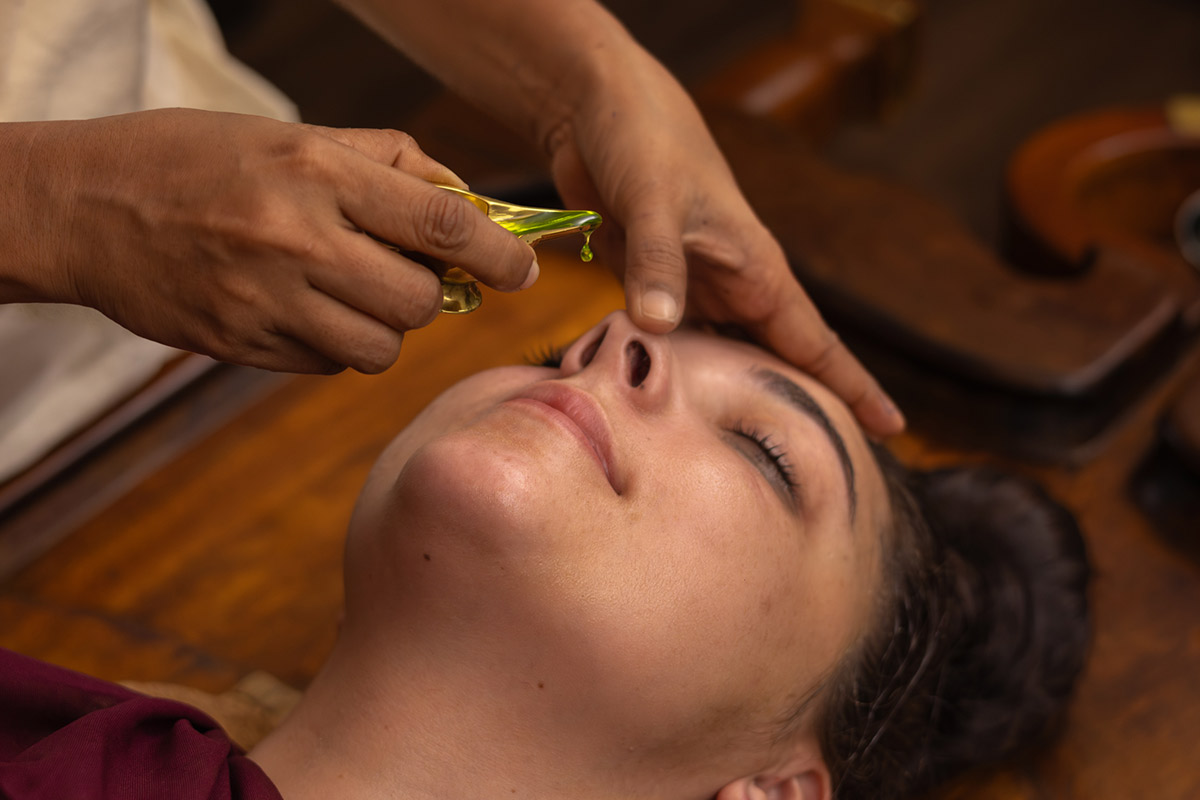
- Nasya – This is nasal therapy, where herbal oils are introduced to the body through the nasal passage with the intention of clearing the head and neck region of vitiated kapha doshas. It is generally used in the treatment of sinusitis, migraines, convulsions, and certain eye and ear conditions.
- Raktamoksha – This is bloodletting, where techniques such as leech therapy or minor bloodletting are used to purify the blood of vitiated pitta doshas. The process is believed to subsequently stimulate the spleen to produce anti-toxic substances that stimulate the immune system. It is usually used in the treatment of chronic or repetitive skin disorders, localised inflammation, and conditions such as enlarged liver or spleen, and gout.
Step 5 – Paschatkarma
This comprises of post-treatment care, which involves following a regimen to optimise and maintain the outcomes and benefits of the main treatment. It often includes peyadikarma (particularly after vamana and virechana), which is adherence to a strict dietary regime. The ayurvedic doctor will advise on what dietary modifications, daily routine adjustments, herbal supplements, and management techniques should be implemented in order to bring about complete purification, and to make the body more receptive to the rejuvenation phase that follows panchakarma treatment.
Benefits of Panchakarma Treatment
The principal benefits of carrying out panchakarma treatment include:
- detoxification, by way of eliminating toxins from the body and subsequently improving overall health and vitality.
- balancing doshas, thereby reducing the risk of diseases caused by an imbalance of vata, pitta, and kapha doshas.
- improved metabolism and digestion, by cleansing the digestive system of toxins and improving nutrient absorption.
- chronic pain management, as therapies can be applied to target conditions such as arthritis, migraines, and joint pain.
- stress relief, as detoxification helps to calm the mind, improve sleep and emotional balance, and enhance mental clarity.
- immunity boost, as treatment can help to strengthen the immune system and speed up recovery from chronic conditions.
- better ageing, as skin conditions improve, thereby boosting the rejuvenation process, and preventing premature ageing.
Adhitya Ayurveda offers a comprehensive panchakarma treatment program, carefully curated by our experienced resident ayurvedic practitioners. Get in touch with our well-informed team for more information on how to get a consultation, panchakarma treatment cost, and procedures.
- What Is Abhyanga Massage? Benefits, Process, and What to Expect
- Understanding the Three Doshas in Ayurveda: Vata, Pitta, and Kapha
- Understanding Panchakarma Treatment for Beginners: A Step-by-Step Guide
- Ayurvedic Treatments for Skin Diseases: Natural Remedies for Healthy Skin
- AYURVEDIC TREATMENTS FOR WEIGHT LOSS: NATURAL AND EFFECTIVE WAYS TO LOSE WEIGHT
- AYURVEDIC MEDICINE & TREATMENT FOR HEART: EVERYTHING YOU NEED TO KNOW
- HEALTH BENEFITS OF AYURVEDA
- HOW TO SELECT THE PERFECT AYURVEDIC RETREAT FOR YOUR WELLNESS HOLIDAY
- UNIQUE THINGS TO DO IN ANURADHAPURA, SRI LANKA
- CHRISTINE’S YOGA AND AYURVEDA JOURNEY WITH ADHITYA
